10% OFF ON ALL PRODUCTS... Coupon Code NEWUSER10

Herbal Infusions: A Natural Way to Support Daily Wellness
Discover how herbal infusions can support daily wellness, hydration, relaxation, and digestion with simple natural ingredients.
Rakesh Gupta
6/30/2026
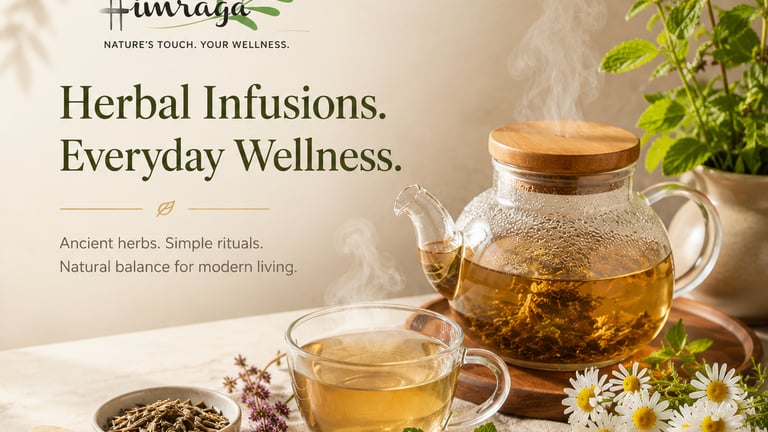
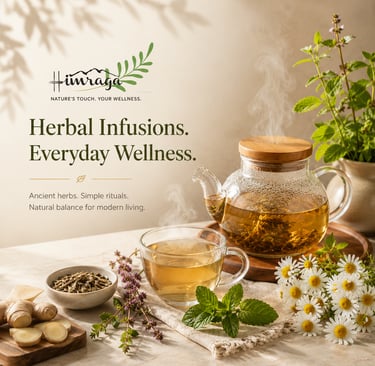
Herbal Infusions: A Natural Way to Support Everyday Wellness
In today’s fast-paced world, many people are looking for simple and natural ways to support their health. Herbal infusions have become a popular choice because they are easy to prepare, gentle to consume, and deeply connected to traditional wellness practices. At Himraga, herbal infusions can be presented not just as a drink, but as part of a mindful lifestyle that supports balance, comfort, and daily well-being.
Herbal infusions are made by steeping herbs, flowers, roots, seeds, or spices in hot water. This process allows the natural flavor, aroma, and beneficial plant compounds to blend into the water, creating a soothing and refreshing drink. Unlike regular tea, which usually comes from the tea plant, herbal infusions are made from a variety of natural ingredients. This makes them versatile, caffeine-free in most cases, and suitable for different wellness goals.
People enjoy herbal infusions for many reasons. Some drink them to relax after a long day, while others use them as part of their morning routine. Many herbal blends are valued for their comforting taste and their role in hydration. In addition, herbal infusions can help create a calming ritual in everyday life, which is often just as important as the drink itself.
What Makes Herbal Infusions Special?
The beauty of herbal infusions lies in their simplicity. They do not require complicated preparation or expensive ingredients. A cup of hot water and a handful of herbs can be enough to create a flavorful and meaningful wellness drink. This makes them accessible for people who want to adopt healthier habits without making major changes to their lifestyle.
Herbal infusions are also highly adaptable. Depending on the herbs used, they can be light and refreshing, warm and spicy, floral and calming, or earthy and grounding. Some people enjoy them in the morning to feel refreshed, while others prefer them at night to unwind. This flexibility is one of the reasons herbal infusions continue to remain popular across cultures and generations.
Another important quality of herbal infusions is that they encourage mindful drinking. Instead of reaching for sugary beverages or heavily processed drinks, people can choose a natural option that feels nourishing and intentional. This small shift can make a positive difference in daily routines and overall wellness habits.
Common Herbal Infusion Ingredients
Different herbs bring different qualities to an infusion. Some are known for their taste, while others are appreciated for the way they make people feel. Here are some of the most popular ingredients used in herbal infusions.
Chamomile
Chamomile is one of the best-known herbs for evening use. It has a mild floral taste and is often chosen by people looking for a calming drink before bed. Its gentle nature makes it a favorite in relaxation-focused blends.
Mint
Mint is refreshing, cooling, and easy to enjoy. It is commonly used after meals because of its clean taste and light feel. Mint infusions can be both energizing and soothing, depending on how they are blended.
Ginger
Ginger adds warmth and a slightly spicy flavor to herbal infusions. It is often used in wellness drinks because of its comforting quality. Ginger-based infusions are especially popular during cooler weather or after heavy meals.
Tulsi
Tulsi, also called holy basil, is an important herb in traditional Indian wellness practices. It is often used in herbal blends for its pleasant aroma and uplifting character. Tulsi infusions are commonly enjoyed in the morning or during times of stress.
Hibiscus
Hibiscus gives herbal infusions a bright red color and a tangy taste. It is refreshing whether served hot or cold and is often chosen for its lively flavor and attractive appearance.
Lemon Balm
Lemon balm has a soft citrus note and is often included in calming herbal drinks. Its delicate flavor makes it a good choice for people who want something light and soothing.
Cinnamon and Clove
Warm spices like cinnamon and clove are sometimes added to herbal infusions for depth and comfort. These ingredients are especially popular in seasonal blends and evening drinks.
Health Benefits of Herbal Infusions
Herbal infusions are not miracle cures, but they can support a healthy lifestyle in meaningful ways. One of their main benefits is hydration. Many people do not drink enough water throughout the day, and herbal infusions offer a flavorful alternative that can make hydration more enjoyable.
They may also support relaxation. Drinking a warm herbal infusion in the evening can signal the body that it is time to slow down. This simple habit can become part of a bedtime routine that promotes rest and recovery.
Digestive comfort is another reason people turn to herbal infusions. Certain herbs, such as ginger and mint, are often chosen after meals because they feel light and soothing. While the effects vary from person to person, many people appreciate the comfort these drinks bring.
Herbal infusions can also support emotional well-being. A warm cup taken slowly can create a pause in the day, helping people feel more grounded and present. In this sense, the value of herbal infusions goes beyond the ingredients themselves.
How to Prepare Herbal Infusions at Home
Making an herbal infusion at home is simple and does not require special equipment. Start by choosing your herb or herbal blend. Use either fresh or dried herbs, depending on what you have available.
Place the herbs in a cup, teapot, or infuser, then pour hot water over them. Let the mixture steep for several minutes so the flavor and aroma can fully develop. Once ready, strain the herbs and enjoy the drink warm. If desired, you can add honey, lemon, or a slice of ginger to enhance the flavor.
The steeping time matters. Light herbs such as chamomile or mint may need only a few minutes, while roots and spices often need a little longer to release their flavor. Experimenting with steeping time can help you discover the taste you enjoy most.
When to Drink Herbal Infusions
There is no single best time to drink herbal infusions. The right time depends on the herb and your personal routine. A calming herbal blend may be ideal in the evening, while a refreshing mint or tulsi infusion might fit better in the morning.
Some people like to drink herbal infusions after meals. Others use them as a mid-afternoon break to reduce the urge for sugary snacks or caffeinated drinks. They can also be part of a self-care routine, where the act of preparing and sipping the infusion becomes a peaceful daily ritual.
If you are building a wellness brand like Himraga, this flexibility is useful because it allows you to position herbal infusions for different customer needs and occasions. That can make the product more appealing to a wider audience.
Herbal Infusions and Modern Wellness
The growing interest in natural health products has made herbal infusions more relevant than ever. Many people are now looking for alternatives that feel clean, simple, and trustworthy. Herbal infusions fit well into this trend because they are rooted in tradition while still matching modern lifestyles.
They also align with the idea of preventive wellness. Rather than waiting until a problem appears, people are increasingly focusing on small daily habits that support long-term balance. A herbal infusion can become one of those habits.
For brands and websites, this creates a strong opportunity. Content about herbal infusions can attract readers who are interested in natural remedies, healthy drinks, lifestyle improvements, and traditional wellness. When written clearly and SEO-friendly, it can also perform well in search engines and bring steady organic traffic.
Safety and Smart Use
Even natural products should be used thoughtfully. Herbal infusions may not be suitable for everyone, especially people with allergies, those taking medication, pregnant women, or individuals with specific health conditions. It is always better to use them responsibly and in moderation.
Not every herb works the same way for every person. Some people may enjoy one infusion but not another. It is a good idea to start with small amounts and observe how your body responds. If you have medical concerns, a health professional can help guide your choices.
This careful approach makes herbal infusions a safer and more sustainable part of a wellness routine. The goal should always be balance, not excess.
Final Thoughts
Herbal infusions are more than just warm drinks. They are a simple, natural, and enjoyable way to support everyday wellness. Whether used for hydration, relaxation, digestion, or mindful living, they offer a gentle path toward healthier habits.
For the Himraga website, this topic is especially valuable because it connects health, tradition, and natural lifestyle content in a way that is both informative and SEO-friendly. A well-written article on herbal infusions can attract readers, build trust, and strengthen the brand’s presence in the wellness space.
About Us
At himraga, we handpick and shade-dry herbs from the Himalayas to bring you fresh, flavorful teas and cooking infusions.
We carefully craft blends from thyme, rosemary, peppermint, and more, perfect for your daily cup or kitchen creations.
Contact Info :
Newsletter
himraga@gmail.com
+91 83830 59361
© 2026. All rights reserved.
The Himraga Story
FAQs
Shipping Policy
Privacy Policy
Connect With Us
Payments Accepted
Razorpay
UPI
Credit card