10% OFF ON ALL PRODUCTS... Coupon Code NEWUSER10

Herbal Infusions vs Regular Tea: Choosing the Right Daily Ritual for Your Wellness
Confused between herbal infusions and regular tea? Learn the differences, daily benefits, and how to choose the right drink for calm, digestion, and sustainable wellness
Rakesh Gupta
7/25/2026
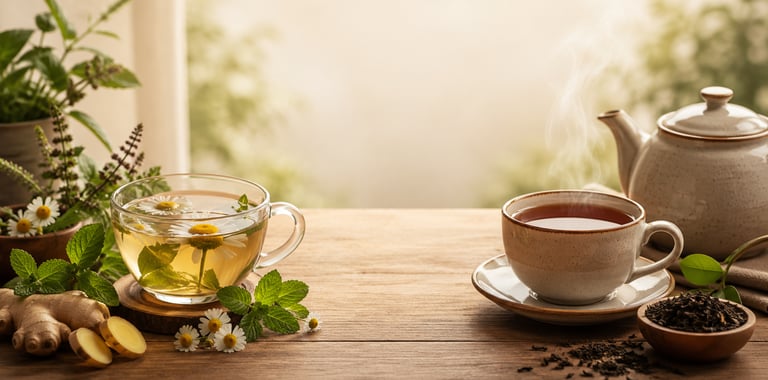
Herbal Infusions vs Regular Tea: Choosing the Right Daily Ritual for Your Wellness
Everyday wellness often begins with a simple choice: what do you drink? For many people, the day starts and ends with a cup of something warm—usually regular tea or, increasingly, a herbal infusion. Both look similar in the cup, but their role in your daily wellness ritual can be quite different.
For a wellness brand like Himraga, explaining this difference clearly helps people make better decisions. Herbal infusions and regular tea can both support comfort, focus, and enjoyment, but they work in different ways and suit different goals. Understanding this is the key to building a ritual that feels right for your body and lifestyle.
What Is a Herbal Infusion?
A herbal infusion is made by steeping herbs, flowers, roots, spices, or leaves (other than the traditional tea plant) in hot water. Common ingredients include tulsi, chamomile, hibiscus, mint, ginger, lemongrass, fennel, and many more. Because they are usually not made from the tea plant, most herbal infusions are naturally caffeine-free.
Herbal infusions are often used for:
Gentle daily wellness support.
Relaxation and evening rituals.
Hydration with flavour, but without sugar.
Specific experiences like calm, warmth, lightness, or freshness.
They are not medicines, but they can become powerful habits when used consistently as part of a balanced lifestyle.
What Is Regular Tea?
Regular tea comes from the leaves of the Camellia sinensis plant. Depending on how the leaves are processed, we get different varieties—black tea, green tea, white tea, oolong, etc. These teas naturally contain caffeine and other plant compounds.
Regular tea is often enjoyed for:
Morning energy and alertness.
Familiar taste and cultural tradition.
Short breaks during work or study.
For many, regular tea is emotionally comforting because it is associated with family, conversations, and routine.
Key Differences: Herbal Infusions vs Regular Tea
1. Caffeine Content
Herbal infusions: Usually caffeine-free (unless blended with actual tea leaves). This makes them suitable for evenings, late nights, or for people who want to reduce caffeine.
Regular tea: Contains caffeine, which can increase alertness but may also disturb sleep or cause jitters if over-consumed.
2. Wellness Role
Herbal infusions: Often seen as slow, gentle wellness tools—supporting calm, digestion comfort, and mindful pauses over time.
Regular tea: More commonly used for quick energy and focus, especially in the morning or during work breaks.
3. Flexibility in Flavour and Function
Herbal infusions: Very flexible. You can blend different herbs to match the moment—calming blends at night, refreshing blends after meals, warming blends in winter.
Regular tea: Has strong personality and flavour of its own. It can be flavoured or spiced, but the tea base and caffeine remain central.
Everyday Benefits of Herbal Infusions
Calm and Mindful Living
Herbal infusions, especially those made with chamomile, tulsi, lemon balm, or lavender, are popular for creating soft, calming rituals. They don’t push the body; they invite it to relax. Over time, this can support better evenings and a more restful frame of mind.
Gentle Digestive Comfort
Ingredients like ginger, peppermint, fennel, and lemongrass are commonly used in herbal blends after meals. For many people, these infusions feel light and soothing, making them a preferred choice when they want comfort without heavy or sugary drinks.
Caffeine-Free Hydration
For those who want flavour without caffeine or sugar, herbal infusions are an easy option. They help increase fluid intake while keeping the drink simple and clean.
Everyday Benefits of Regular Tea
Energy and Focus
Regular tea’s caffeine content can help you feel more awake and focused, especially in the morning or when you feel low on energy. For many, this is the main reason they reach for black or green tea.
Familiar Taste and Cultural Comfort
Tea is deeply rooted in daily life—office tea breaks, chai stalls, family gatherings. That emotional connection can itself be a kind of comfort and wellness, as long as it is consumed mindfully.
How to Choose the Right Drink for Your Routine
Morning
If you want energy and alertness, regular tea (black or green) can be a good choice.
If you prefer a gentler start, a herbal infusion with tulsi, ginger, or mint can feel warm and supportive without strong caffeine.
Afternoon
During work, a light cup of regular tea can help maintain focus.
For a calmer break, a mild herbal blend can give a pause without overstimulating.
Evening and Night
Regular tea, especially strong or late at night, may disturb sleep for some people.
Herbal infusions are usually better in the evening—a cup of chamomile or tulsi can support a slow wind-down.
Building a Balanced Daily Ritual
You don’t have to choose only one drink forever. The most practical approach is balance:
Use regular tea when you truly need energy and focus.
Use herbal infusions when you want calm, comfort, or caffeine-free hydration.
Let time of day guide the choice: strong tea for morning, herbal infusions for night.
Over time, this creates a more harmonious rhythm—less strain, more intentional pauses.
Slow Results, Real Impact
Like all herbal habits, the impact of herbal infusions appears slowly. One cup will feel nice, but the deeper benefits come when you:
Drink them regularly.
Pair them with better sleep, nutrition, and movement.
Use them to replace unhealthy choices (extra sugar, heavy energy drinks, late caffeine).
This slow, sustainable change is exactly the kind of wellness story Himraga can stand for.
Final Thoughts
Herbal infusions and regular tea both have a place in modern life. The question is not “which is better?” but “which is better for this moment and for my long-term wellness?”. When you understand the difference between a caffeine-driven boost and a gentle herbal ritual, you can design a daily drink pattern that truly supports you.
A warm cup is more than a beverage; it is a decision about how you treat your body and mind. Whether you choose herbal infusions, regular tea, or both, making that choice with awareness is where real wellness begins.
FAQ
Is herbal infusion healthier than regular tea?
It depends on your goal. Herbal infusions are better for caffeine-free calm and gentle daily wellness, while regular tea is better for energy and alertness.
Can I drink herbal infusions and regular tea on the same day?
Yes, many people do. Use regular tea earlier in the day and herbal infusions later, especially in the evening.
Are herbal infusions safe every day?
Most herbal infusions are safe in moderation for daily use, but it’s wise to be cautious if you have allergies, medical conditions, or take medication.
Will switching to herbal infusions help my sleep?
Reducing late-night caffeine and adding a calming herbal infusion can support better sleep patterns over time, especially when combined with good sleep habits.
About Us
At himraga, we handpick and shade-dry herbs from the Himalayas to bring you fresh, flavorful teas and cooking infusions.
We carefully craft blends from thyme, rosemary, peppermint, and more, perfect for your daily cup or kitchen creations.
Contact Info :
Newsletter
himraga@gmail.com
+91 83830 59361
© 2026. All rights reserved.
The Himraga Story
FAQs
Shipping Policy
Privacy Policy
Connect With Us
Payments Accepted
Razorpay
UPI
Credit card