10% OFF ON ALL PRODUCTS... Coupon Code NEWUSER10

Key Health Benefits of Switching to Herbal Tea Infusions Daily
Switching to herbal tea infusions daily can support better sleep, calmer digestion, lower stress, heart health, and cleaner hydration. Learn the key benefits and how to build a sustainable herbal ritual
Rakesh Gupta
7/21/2026
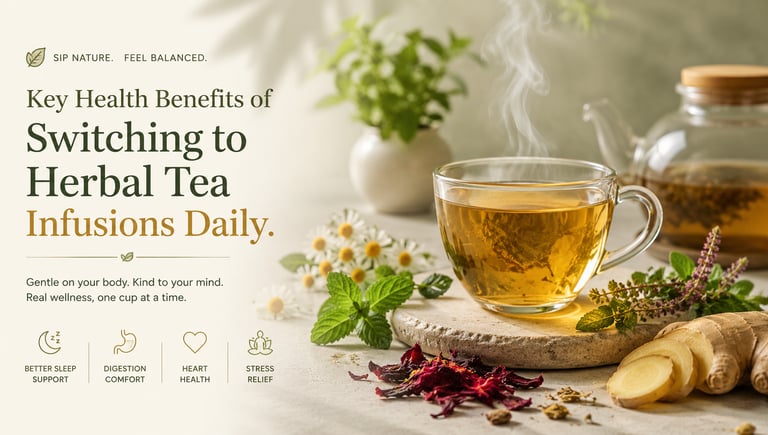
Key Health Benefits of Switching to Herbal Tea Infusions Daily
Modern routines are busy, screen-heavy and often fuelled by strong tea, coffee and sugary drinks. Many people want to feel better without making extreme changes, and one of the simplest starting points is the daily cup. Switching from only caffeinated drinks to regular herbal tea infusions is a small habit shift that can create meaningful health benefits over time.
Herbal infusions are made from flowers, leaves, roots, spices and botanicals rather than the traditional tea plant, so most of them are naturally caffeine-free. Taken daily, they do more than just hydrate: they can gently support sleep, digestion, stress balance, heart wellness and overall comfort as part of a slow, sustainable wellness
1. Calmer Sleep and Better Evening Wind-Down
One of the most noticeable benefits of daily herbal tea infusions is improved evening calm and sleep quality. Calming herbs like chamomile, lemon balm or tulsi are often used before bed to help the mind and body slow down. Over several weeks of regular use, many people report fewer night-time awakenings and a more relaxed pre-sleep routine
This effect is not instant like a sleeping pill. Instead, the warm, caffeine-free infusion becomes part of a ritual: screens go off, lights soften, and the body receives a gentle signal that it’s time to rest. Consistency matters here; studies and expert guides note that two to four weeks of regular calming herbal tea can meaningfully support subjective sleep quality.
2. Gentler Digestive Comfort in Daily Life
Digestive support is another key benefit of switching to herbal infusions. Herbs like peppermint, ginger and fennel are well known for helping ease bloating, gas and feelings of heaviness after meals when consumed regularly. Research summaries and practitioner guides highlight menthol in peppermint and compounds in ginger that can relax intestinal muscles, support gastric emptying and reduce mild nausea over time.food.ndtv+2
When you choose a digestive herbal tea instead of a sugary drink or extra heavy tea after meals, you give your gut something calmer to work with. Over weeks of daily use, this can translate into fewer flare‑ups and a more comfortable, steady digestive pattern for many people.
3. Reduced Reliance on Caffeine and Cleaner Energy
Switching to herbal tea infusions daily also helps reduce reliance on caffeine. Most herbal infusions contain no caffeine, yet they still provide warmth, flavour and a psychological sense of “having a break”. Guides on herbal wellness explain that replacing some cups of strong black or green tea with herbal infusions can lower jitteriness, energy crashes and sleep disruption, while still giving the mind a gentle pause.teaoflifeapothecary+1
This does not mean you must give up caffeine completely. Many people simply move to a mixed routine: caffeinated tea earlier in the day, herbal infusions later. Over time, this pattern supports more stable energy, less nervous overstimulation and a more balanced daily rhythm.parade+1
4. Support for Heart Health with Specific Herbs
Certain herbal infusions, used daily and under guidance, have evidence for supporting heart health markers. Hibiscus tea is one of the most studied examples. Summaries of clinical research show that drinking hibiscus tea regularly can lead to modest reductions in systolic blood pressure over several weeks, particularly in people with elevated
Because hibiscus and similar cardiovascular‑supportive herbs are usually caffeine-free, they can be added to a daily routine as a gentle adjunct to heart‑healthy habits like movement and dietary changes. They are not a replacement for prescribed treatment, but they may contribute positively when used consistently and mindfully
5. Antioxidant and Anti‑Inflammatory Protection
Herbal infusions carry bioactive plant compounds—antioxidants, flavonoids and anti‑inflammatory agents—that help protect cells from oxidative stress and low‑grade inflammation. Comprehensive guides on tea and herbal medicine emphasise that these compounds can play a role in long‑term health by modulating inflammation pathways, supporting immune defenses and protecting tissues from damage associated with chronic disease risk.
Different herbs contribute different profiles: hibiscus and rosehip may be rich in vitamin C, chamomile carries certain flavonoids, and many botanicals bring polyphenols and other protective compounds. Daily intake, even in modest amounts, adds a steady stream of these plant nutrients to the diet.
6. Immune Support and Everyday Resilience
Some herbal infusions are chosen specifically for immune support—such as blends containing tulsi, turmeric, hibiscus, echinacea or rooibos. Wellness articles and practitioner resources note that antioxidants, vitamins and anti‑inflammatory compounds in these herbs may help fortify the immune system and improve resilience against routine infections when consumed regularly.
This effect is gradual rather than dramatic. Over months, pairing daily herbal infusions with decent sleep, nutrition and activity can help the body maintain stronger baseline defenses, making minor illnesses easier to handle.
7. Hydration That Feels Enjoyable and Sustainable
Herbal tea infusions make it easier to stay hydrated, especially for people who don’t enjoy plain water. Because most herbal teas are caffeine‑free and nearly calorie‑free, they count towards daily fluid intake without disrupting fluid balance or adding excessive sugar. Health and nutrition articles explain that caffeine‑free beverages hydrate the body as effectively as water, making herbal tea a practical alternative throughout the day.
This matters because many wellness problems—headaches, fatigue, dry skin, poor concentration—are worsened by low fluid intake. When herbal tea becomes part of a daily routine, meeting hydration goals feels more pleasant and sustainable.
8. Stress Management and Emotional Balance
Daily herbal infusions can also gently influence how the body responds to stress. Nutrition and wellness guides describe how herbs like chamomile, lemon balm and tulsi appear to modulate neurotransmitters linked with stress regulation, including GABA and serotonin, when consumed consistently over several weeks
The effect is subtle: less about “removing stress” and more about helping the nervous system maintain a steadier baseline. Combined with mindful habits—taking a quiet tea break away from screens, focusing on breath and warmth—daily herbal tea can become a simple, powerful emotional anchor.
9. Skin and Aging Support via Antioxidants
Some fruit‑and‑flower herbal infusions are promoted for skin health, thanks to their antioxidant content. Guides from herbal tea brands and wellness blogs mention that blends containing chamomile, hibiscus, rosehip, butterfly pea flower and similar botanicals may support skin elasticity, hydration and a more radiant appearance by reducing oxidative stress in skin tissues.teaperfectionist+2
While herbal tea alone will not transform skin, daily intake as part of a broader routine (sun protection, nutrition, sleep) can contribute to a more youthful, healthy look over time.
Building a Daily Herbal Tea Infusion Ritual
To actually experience these benefits, the key is not one cup—it’s the ritual:
Choose blends that match your goals (calm, digestion, heart, immune support).
Drink at consistent times: calming teas in the evening, digestive teas after meals, refreshing blends in the afternoon.
Keep sugar low or avoid it, so herbs stay the focus and the drink remains clean.
Combine the tea moment with a micro‑pause: step away from devices, breathe, and notice aroma, warmth and taste.
Articles on daily herbal tea benefits emphasise that 30 days of regular use can already set subtle changes in motion in sleep, digestion, blood pressure and stress response, with deeper benefits appearing over months.
Safety, Moderation and When to Be Careful
Even though herbal infusions are natural, they are not automatically suitable for everyone. Health guides advise caution for:
People who are pregnant or breastfeeding.
Those on regular medication, especially for heart, blood pressure or mood.
Individuals with plant or pollen allergies (for example, to the daisy family in chamomile).
It’s wise to introduce new herbs slowly, observe how your body responds, and check with a health professional if you plan daily use and have existing conditions. Herbal tea should be a supportive habit, not a stand‑alone treatment
About Us
At himraga, we handpick and shade-dry herbs from the Himalayas to bring you fresh, flavorful teas and cooking infusions.
We carefully craft blends from thyme, rosemary, peppermint, and more, perfect for your daily cup or kitchen creations.
Contact Info :
Newsletter
himraga@gmail.com
+91 83830 59361
© 2026. All rights reserved.
The Himraga Story
FAQs
Shipping Policy
Privacy Policy
Connect With Us
Payments Accepted
Razorpay
UPI
Credit card